I asked my manager how long an AI agent would take to finish a task. He replied with a link to the end of the universe.
It was Wikipedia’s “Timeline of the far future.” I wanted an estimate for a piece of software that carries out a task. He had, jokingly, offered a rather generous deadline.
Before bed that night, I opened it properly. One entry became another question, another link, another tab. Soon I was reading about the Sun growing old, the last stars fading, and even black holes slowly disappearing.

I had started by asking how long something would take. Now I was wondering how long anything could last.
Somewhere in that rabbit hole, I felt very small and oddly calm. The worries I had brought home were still there, but they had stopped filling the entire room.
That feeling stayed with me: perhaps seeing how much eventually ends can help us care more thoughtfully about what is here.
When every week feels like a new era.
I have worked in AI for more than half a decade. A new model, a surprising result, a tool that changes what seems possible: there always seems to be another announcement waiting.
It is exciting. It can also be exhausting. You finish understanding one development and discover that the conversation has already moved on. An ordinary week can leave you feeling behind, even when you have spent it doing useful work.
My work involves taking ideas from research and experimentation into applications people can actually use. That means trying things, finding their limits, making them reliable, and helping them work when more people depend on them.
A promising demonstration is a beginning. The real questions arrive afterward. Does it solve someone’s problem? Can they trust it? What happens when it makes a mistake?
Keeping up matters. But following every announcement is an impossible definition of progress. Some weeks, progress is learning one idea properly. Sometimes it is discovering that a simpler approach works better.
The far-future timeline gave me some distance from that constant urgency. Our plans matter, but they are small enough to revise. A delayed project is still a delayed project. It does not have to become a failed life.
Even the stars have a season.
In about five billion years, the Sun will grow into a red giant. Later, it will leave a small, cooling remnant behind. Other stars will last much longer, but their fuel is finite too.1
One scientific picture carries the story onward: stars fade, their remains cool, and black holes become some of the last great survivors. Even those may slowly lose their mass. Far beyond that lies the possibility of a universe with too little usable energy for familiar activity to continue.2
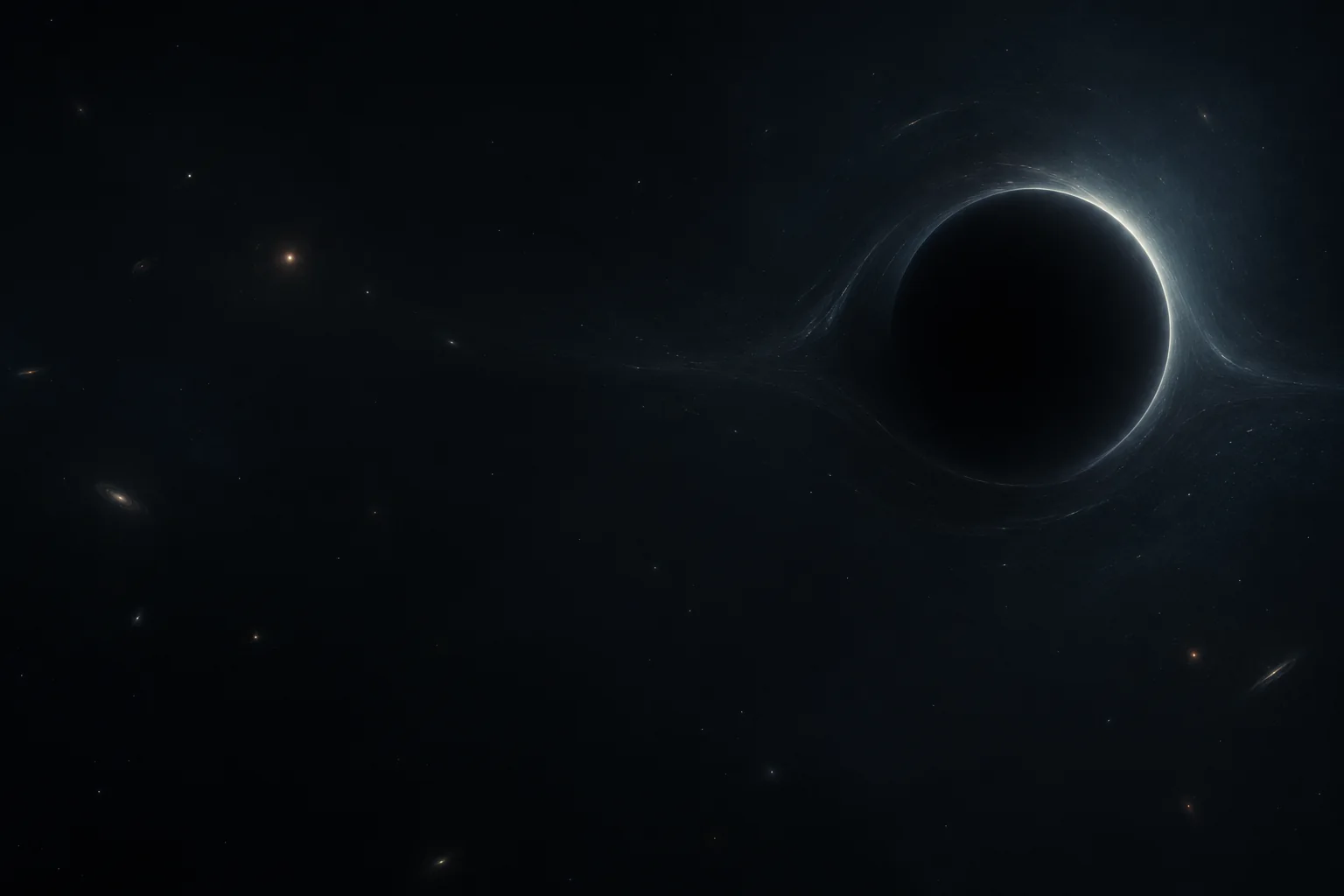
The furthest predictions depend on physics we have yet to settle. This is one possible future. The further we look, the more the story depends on things we do not yet know.
Try this: tap “Next chapter” to watch the sky change.
The age of stars
Approximate time since the Big Bang
Bright points: stars still shining
Our chapter: stars shine, and we can look up and wonder.
Our moment in the story.
Explore between chapters
Equal steps multiply the years rather than adding them. The buttons mark rough milestones; the late chapters depend on unresolved physics.
Illustrative objects and sizes. This is one possible future, not a known end of time.
Those numbers soon outrun intuition. Counting once every second, without stopping, gets you to a million in about twelve days. A billion takes almost 32 years. A trillion takes about 32,000 years.*
The future contains distances in time that ordinary words barely help us imagine. Yet we are here, in the chapter where the stars still shine.
We have barely come through the door.
The universe is about 13.8 billion years old.3 Enormous as that sounds, it is young beside one estimate for the era of ordinary stars: roughly 100 trillion years.2
Compress that whole era into a day, and everything so far fits into about twelve seconds after midnight.
If the age of starlight were 24 hours…
Try this: jump five billion years ahead. Watch how little the clock moves.
Today, just after midnight.
All the universe’s history so far fits into about 12 seconds.
How the comparison works
We squeeze the time from the Big Bang to the chosen end of the stellar era into a day. More time for stars does not guarantee more time for humanity.
13.8 billion ÷ 100 trillion × 86,400 = 11.92 seconds.
Changing this number explores the analogy; it is not a range of scientific confidence.
In those opening seconds, part of the universe has learned to wonder about itself. We have built telescopes, machines that learn, and an encyclopedia that can turn a workplace joke into a night of questions.
There is something wonderful about being alive in a world we can keep discovering. Learning becomes more than the effort to stay employable. It is a way to take part in that discovery.
A song does not fail because it ends.
You do not finish a beautiful song and decide it was pointless because it ended. You do not regret laughing with a friend because the evening could not last forever.
The value was there while it happened. An ending does not reach backward and remove it.
Yet we sometimes ask our lives to meet a harsher standard. Our work must leave a permanent mark. Our name must survive us. Something must keep proving that we mattered.
I am not convinced permanence is a fair test.
A teacher helps a child understand. A colleague makes time for your question. Someone sits beside you on a frightening night. These acts do not need a witness in the distant future. Someone needed them then.
Even if every record were eventually lost, the person who was comforted was still comforted.
Cosmic scale can soften an awkward meeting or a failed attempt. It cannot make grief disappear or pay the rent. Our lives still matter at the scale where we experience them. A wider view should give us room to breathe and try again, while keeping us attentive to what actually hurts.
Build something that helps while it is here.
In AI, the thing I build today may eventually be replaced. That possibility is already part of the job. It is still worth asking who it can help while it is here.
Perhaps it gives someone an hour of their day back. Perhaps it makes a difficult task manageable. Perhaps the most useful thing I contribute is an explanation that helps another person grow.
The people using our work have limited time too. Making something dependable, admitting its limits, and leaving it understandable are ways of respecting that time.
This is where the far future brings me back to my desk. I want to keep experimenting, keep learning, and do the work carefully because there is someone on the other side of it.
And there is a quiet pleasure in understanding something that confused you yesterday. You are allowed to be a beginner, even in a field you know well. Curiosity does not have an expiry date.
Leave room for an ordinary Tuesday.
Remembering that time is limited can become another demand to hurry: achieve more, read more, make every hour count. That sounds motivating until even rest begins to feel like failure.

Giving your best will look different on different days. Sometimes it means concentrating on a hard problem. Sometimes it means asking for help, keeping a small promise, or getting enough sleep to return with patience.
There should be room for a walk, a meal you actually taste, and a familiar story someone you love tells again. These are parts of the life our work is meant to support.
Gratitude can be equally ordinary. You can want things to improve and still notice a friend who checked in, a question you finally understood, or ten quiet minutes after a difficult afternoon.
The far future has not used up tomorrow.
Something can still be learned. A friendship may still be repaired. A stubborn problem may yield to patience or a better idea. An eventual ending tells us very little about what we might make possible next week.
That is enough room for hope, and enough reason to participate.
Take one thing back with you
A person to make time for. Something you want to understand. One task you could do with care.
Choose one that feels possible today.
My manager’s joke began with how long an AI task would take. It left me thinking about what I give my own time to.
There will be unfinished things. There will be days when I fall short. But there are also people to help, questions to follow, and ordinary moments I would like to be present for.
The stars are still shining.
We are here.
There is time to do something kind with that.
What feels worth your attention today?
Comments are public. Share only what you are comfortable making public.